

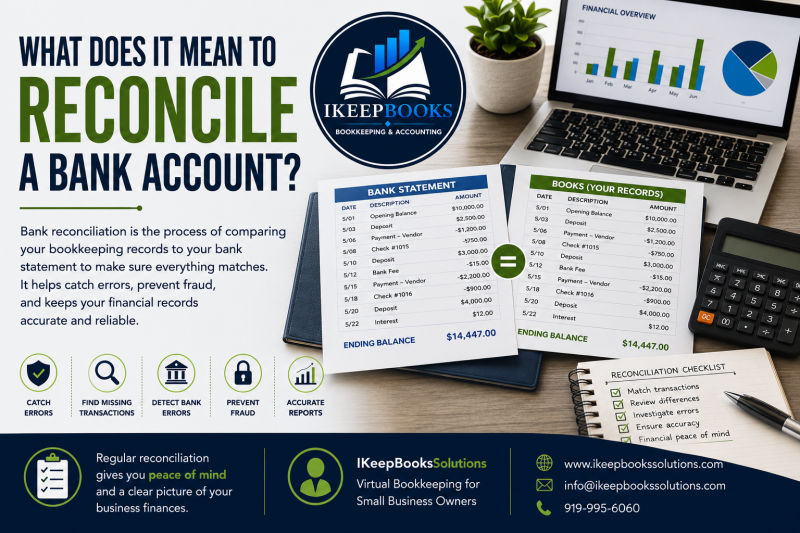
What Is Bank Reconciliation and Why Does Your Business Need It?
Running a business involves more than making sales—it also means keeping accurate financial records. One of the most important bookkeeping tasks is bank reconciliation, yet many business owners aren't familiar with what it actually does.
What Is Bank Reconciliation?
Bank reconciliation is the process of comparing your bookkeeping records with your bank statement to ensure every transaction matches.
This includes checking:
- Customer payments
- Business expenses
- Bank fees
- Deposits
- Transfers
- Outstanding checks
If something doesn't match, your bookkeeper investigates the difference and makes the necessary corrections.
Why Is It Important?
Bank reconciliation helps ensure your financial records are accurate. Without it, small mistakes can go unnoticed and lead to bigger problems later.
Regular bank reconciliation can help you:
- ✅ Catch missing or duplicate transactions
- ✅ Detect bank errors or unauthorized charges
- ✅ Keep your financial reports accurate
- ✅ Better understand your cash flow
- ✅ Be prepared for tax season
When your books are accurate, you can make business decisions with confidence.
A Simple Example
Imagine your bank statement shows a customer paid you $2,000, but the payment was never recorded in your bookkeeping software.
Your financial reports would show less income than you actually earned, giving you an inaccurate picture of your business.
A monthly bank reconciliation helps identify and correct issues like this before they become bigger problems.
Does Accounting Software Do This Automatically?
Many business owners believe software like QuickBooks handles everything automatically. While it can import transactions from your bank, it still requires someone to:
- Review each transaction
- Categorize it correctly
- Investigate discrepancies
- Confirm that your books match your bank statement
Technology is a great tool, but it doesn't replace professional review.
How Often Should You Reconcile?
For most small businesses, reconciling your accounts once a month is the best practice. Businesses with a high volume of transactions may benefit from more frequent reconciliations.
Staying consistent helps keep your financial records current and reduces the risk of costly errors.
Final Thoughts
Bank reconciliation is one of the most valuable services a bookkeeper provides. It helps ensure your books are accurate, your financial reports are reliable, and your business decisions are based on trustworthy information.
At IKeepBooksSolutions, we help small business owners keep their books organized, accurate, and up to date—so they can spend less time worrying about finances and more time growing their business.

Your Bank Balance Is NOT Your Profit: Why Every Business Owner Should Know the Difference
As a business owner, it's easy to open your banking app, see a healthy balance, and think:
"I have $15,000 in the bank. My business is doing great!"
While seeing money in your account is encouraging, your bank balance alone doesn't tell you how profitable your business really is.
In fact, relying only on your bank balance can lead to poor financial decisions, cash flow problems, and unexpected financial stress.
What's the Difference Between Cash and Profit?
Your bank balance is simply the amount of money currently available in your account.
Your profit is what's left after all of your business income and expenses have been recorded and accounted for.
Even if your account shows $15,000 today, you may still have:
- Vendor invoices: $4,000
- Payroll: $5,000
- Credit card payment: $2,000
- Estimated taxes: $2,500
- Insurance premiums
- Rent and utilities
That means much of the money in your account may already be committed to upcoming expenses.
Without accurate bookkeeping, it's easy to mistake available cash for actual profit.
A Simple Example
Imagine your business has:
Bank Balance: $15,000
At first glance, everything looks great.
But after accounting for your financial obligations:
- Vendor invoices: $4,000
- Payroll: $5,000
- Credit card payment: $2,000
- Estimated taxes: $2,500
Your available cash is much lower than your bank balance suggests.
This is why successful business owners don't rely on their bank balance alone—they rely on accurate financial reports.
Why Accurate Bookkeeping Matters
Professional bookkeeping helps you:
- Track income and expenses accurately
- Reconcile bank and credit card accounts
- Monitor cash flow
- Prepare reliable financial reports
- Make informed business decisions
- Stay organized throughout the year
Instead of guessing, you'll know exactly how your business is performing.
The Reports That Matter
A healthy business isn't measured by its bank balance alone.
Three key financial reports provide a much clearer picture of your financial health:
Profit & Loss Statement
Shows whether your business is actually making money.
Balance Sheet
Shows what your business owns, what it owes, and your owner's equity.
Cash Flow Statement
Shows how cash moves in and out of your business, helping you plan and avoid surprises.
Together, these reports give business owners the information they need to make confident financial decisions.
Successful Business Owners Know Their Numbers
Growing a business requires more than checking your bank balance.
Successful business owners review their financial reports regularly, understand their cash flow, and use accurate bookkeeping to guide their decisions.
When you know your numbers, you can plan, avoid costly surprises, and focus on growing your business.
Our Mission
IKeepBooksSolutions is dedicated to helping real estate professionals and small business owners maintain organized, accurate, and up-to-date financial records.
Our goal is simple:
- Keep your books organized.
- Provide clear financial reports.
- Help you understand your numbers.
- Give you more time to focus on growing your business.
As we prepare for our official launch, we're committed to sharing practical bookkeeping knowledge that helps business owners make smarter financial decisions.
Final Thought
Your bank balance tells you how much cash you have today.
Your bookkeeping tells you how healthy your business really is.
When you understand the difference, you're in a much better position to make informed decisions and build a stronger business.
We Handle the Numbers. You Focus on Growth.
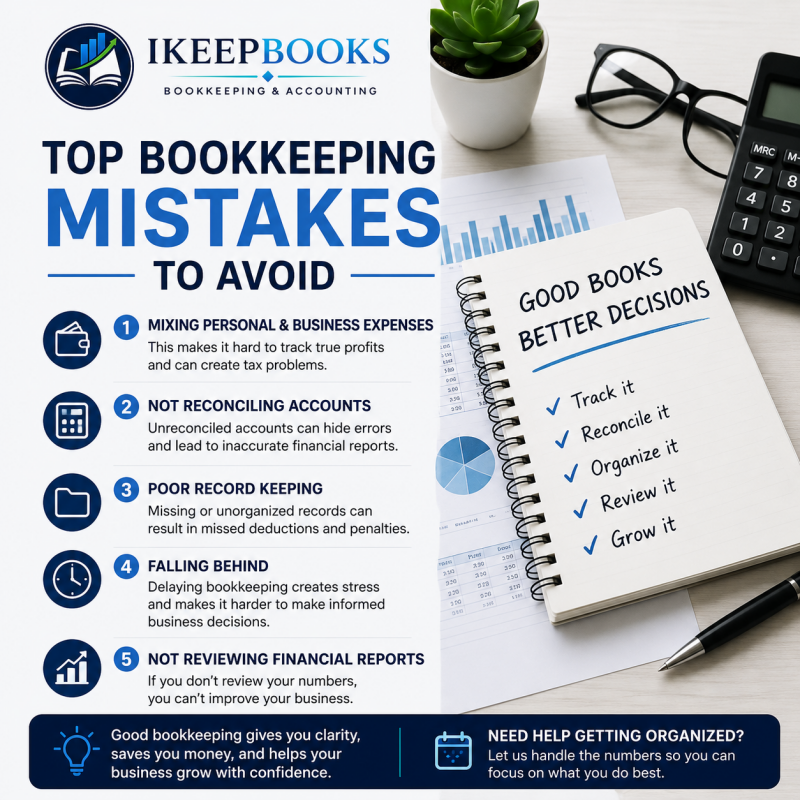
5 Bookkeeping Mistakes That Can Cost Your Business Money
Many business owners focus on making sales but overlook their bookkeeping. Small bookkeeping mistakes can lead to inaccurate financial reports, missed tax deductions, cash flow problems, and unnecessary stress.
Here are five common mistakes to avoid:
- Mixing personal and business expenses – Keep separate accounts to make bookkeeping and tax preparation easier.
- Not reconciling bank accounts – Monthly reconciliations help catch errors and ensure your records are accurate.
- Poor record keeping – Save receipts and organize documents so you always have the information you need.
- Falling behind on bookkeeping – Updating your books regularly gives you a clear picture of your business's financial health.
- Not reviewing financial reports – Your Profit & Loss statement and Balance Sheet help you make informed business decisions.
Accurate bookkeeping isn't just about staying organized—it's about making smarter decisions with confidence.
Need help keeping your books organized?
Visit www.ikeepbookssolutions.com to learn more about our virtual bookkeeping services.